Independent evaluation recognises Tangible’s approach to coding education
Tangible has received the Quality Pedagogy certificate from EdTech Impact, giving teachers, schools and partners independent reassurance about the learning behind the programme.
Tangible has received the Quality Pedagogy certificate from EdTech Impact, giving teachers, schools and partners independent reassurance about the learning behind the programme.
A coding programme can look exciting, keep learners busy and still leave an important question unanswered: is it helping them learn?
That question matters to teachers who are being asked to introduce coding without always having specialist training. It also matters to schools and funders deciding which education programmes they can trust.
Tangible has now been awarded the Quality Pedagogy certificate following an independent evaluation by EdTech Impact.
What was evaluated?
The evaluation looked at Tangible’s coding curriculum for learners aged 8 to 16, including
- Coding and algorithms
- Computational thinking
- Design thinking and problem-solving
- Digital citizenship
- Tangible’s structured coding programme sessions
The evaluators considered both what Tangible teaches and how learners experience it. This included whether learners participate actively, construct their own understanding, explore different ways to solve problems and work collaboratively.
Tangible received an overall score of 84% for its pedagogical approach, placing it in the “Good” category.
Its strongest area was collaboration, which scored 87%. The evaluators recognised the way Tangible activities encourage learners to work together, support one another and share their solutions.
What did the evaluators find?
The evaluation highlighted several parts of Tangible’s approach:
Learners are active participants.
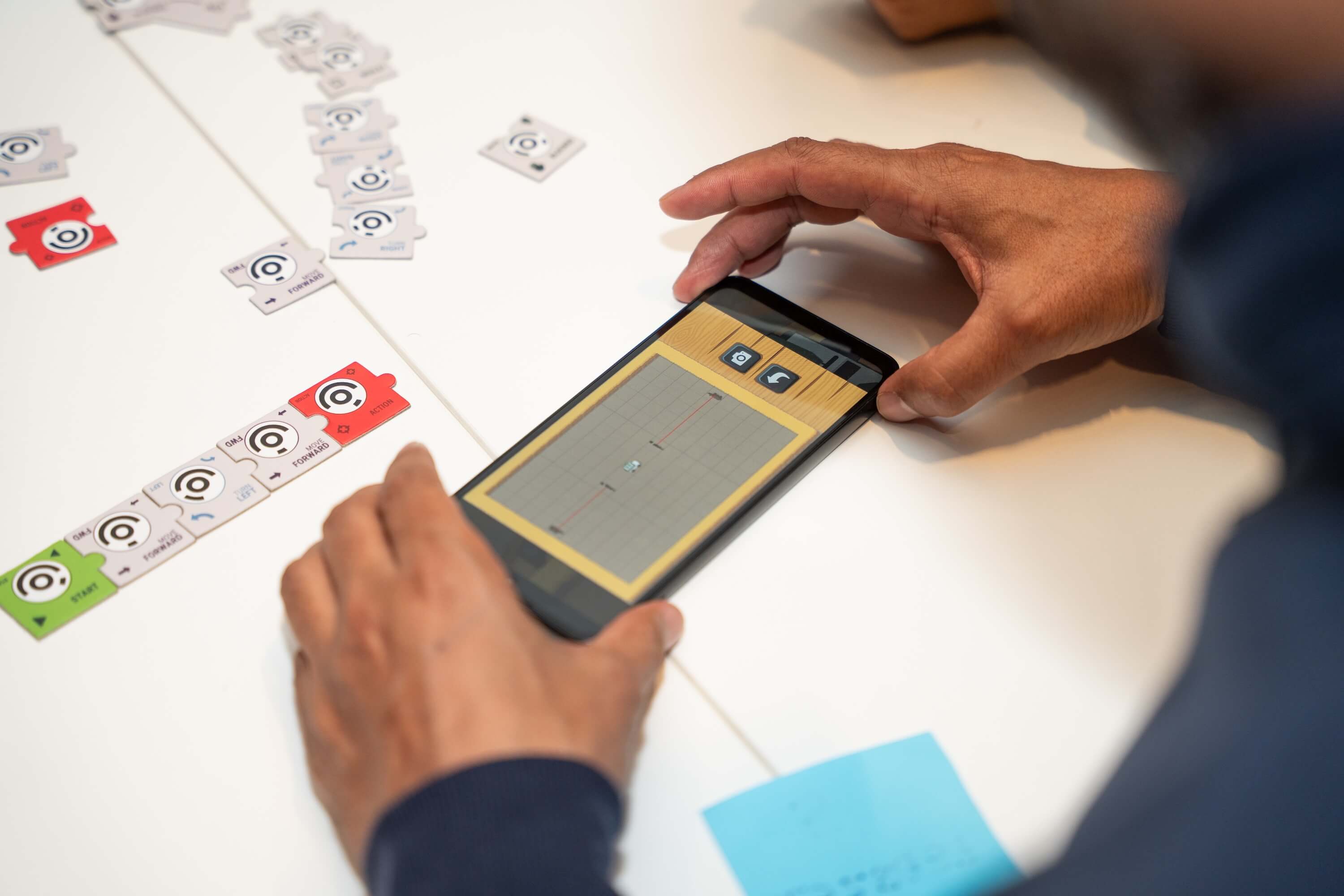
Learners build their code using physical puzzle pieces, test their solution, and make adjustments when it does not work as expected. They learn by doing, rather than only watching or listening.
Problem-solving is part of the learning process.
Tangible activities ask learners to break down challenges, recognise patterns, build sequences and find more efficient solutions.
Collaboration is built in.
Learners have frequent opportunities to compare ideas and solve challenges together, developing communication and teamwork alongside coding skills.
The first step into coding is approachable.
The physical coding pieces give learners something they can see, touch and move before testing their solution digitally.
Teachers do not need previous coding experience to begin.
Ready-made lessons and facilitator training give teachers a practical starting point, even if they are still building their own confidence in coding.
Who is EdTech Impact?
EdTech Impact has worked with educators across the global EdTech market since 2010, building, testing and refining frameworks for assessing education technology.
The Quality Pedagogy evaluation uses the Education Alliance Finland method, which draws on Finnish education research and is applied by trained teacher-evaluators. More than 300 learning products around the world have been evaluated using the method.
The assessment concluded that Tangible represents sound educational quality and engages learners actively and collaboratively while developing computational thinking.
What does the certification mean?
The certificate does not simply recognise that learners enjoy Tangible. It provides independent confirmation that the programme is designed around sound learning principles.
For teachers, that means greater confidence that Tangible offers a practical way to introduce coding and computational thinking.
For schools and education partners, it provides an additional layer of evidence when choosing a coding programme.
For the Tangible team, the evaluation also provides clear feedback about what is working and where the programme can continue to improve.
“Tangible was created to make coding practical for teachers to facilitate and easier for learners to understand,” says Prof Jean Greyling. “This evaluation gives us independent confirmation that learners are doing what we hoped they would do: thinking, testing, working together and trying again.”
Tangible’s Quality Pedagogy certificate is valid from July 2026 to July 2027.